The cryptocurrency industry consists of many independent blockchain networks. Bitcoin, Ethereum, Solana and other blockchains have their own technologies, rules and ecosystems. Because these networks do not automatically share assets with one another, transferring cryptocurrency between them can be challenging.
Crypto bridges are designed to help solve this interoperability problem.
A blockchain bridge allows users to transfer assets, or representations of assets, between different blockchain networks. Instead of physically moving a cryptocurrency from one blockchain to another, bridges use mechanisms such as locking, minting, burning, releasing or liquidity pools.
Understanding how crypto bridges work is important for cryptocurrency users because bridges can provide greater flexibility, but they also introduce additional risks.
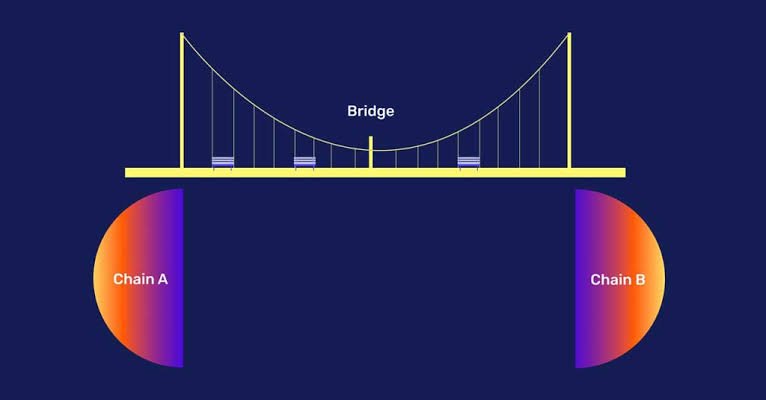
What Is a Crypto Bridge?
A crypto bridge, also called a blockchain bridge or cross-chain bridge, is a protocol that connects two or more separate blockchain networks.
For example, a bridge may allow a user to move an asset from Ethereum to another compatible blockchain.
The original asset generally does not leave the source blockchain. Instead, the bridge uses a mechanism to represent or make an equivalent amount available on the destination blockchain.
This allows users to access applications, liquidity and services available on another network.
Why Are Crypto Bridges Needed?
Blockchains are generally independent systems.
Bitcoin and Ethereum, for example, use different architectures and have different methods of processing transactions. Assets native to one blockchain cannot automatically be used on another blockchain.
Bridges help connect these separate ecosystems.
They can allow users to:
- Move assets between blockchain networks
- Access decentralized applications on other chains
- Transfer liquidity between ecosystems
- Use tokens in different blockchain environments
- Potentially reduce transaction costs by moving assets to another network
As the number of blockchain networks continues to grow, interoperability has become an important part of the cryptocurrency ecosystem.
How Does a Crypto Bridge Work?
The exact mechanism varies between bridge protocols, but the general process can be explained using a simple example.
Suppose a user wants to move a cryptocurrency from Blockchain A to Blockchain B.
Step 1: Select the Networks
The user connects a compatible cryptocurrency wallet and selects the source and destination blockchains.
The user then chooses the asset and amount to transfer.
Step 2: Deposit the Asset
The cryptocurrency is sent to a bridge-controlled smart contract or another mechanism on the source blockchain.
Depending on the bridge design, the original asset may be locked or otherwise held securely.
Step 3: Verify the Transaction
The bridge needs to confirm that the transaction actually occurred on the source blockchain.
This verification may involve smart contracts, validators, relayers, or other cross-chain infrastructure.
Step 4: Create or Release the Destination Asset
After verification, the bridge makes the corresponding asset available on the destination blockchain.
This could happen through token minting, releasing existing liquidity or another mechanism.
Step 5: Receive the Asset
The user receives the corresponding asset in their destination-chain wallet.
The user can then potentially use it with decentralized applications or other services supported by that blockchain.
Lock-and-Mint Model
One common bridging mechanism is called lock-and-mint.
Under this model, the original cryptocurrency is locked on the source blockchain.
An equivalent representation is then created on the destination blockchain.
For example, suppose a user deposits 10 units of a token into the bridge.
The bridge may lock those 10 original tokens and issue 10 corresponding bridged tokens on the destination network.
The goal is to maintain a relationship between the locked original assets and the tokens circulating on the destination chain.
When the user wants to return to the original network, the destination tokens may be burned and the original tokens released.
Burn-and-Mint Model
Some cross-chain systems use a burn-and-mint mechanism.
Instead of locking the original tokens, the representation on one network is burned.
An equivalent amount can then be minted on another supported network.
This approach can be useful for tokens specifically designed to operate across multiple blockchain networks.
The exact supply and security mechanisms depend on the token and protocol.
Liquidity-Based Bridges
Another approach uses liquidity pools.
A bridge may maintain pools of assets on different blockchains.
For example, users may deposit one asset on Blockchain A, while the bridge provides the corresponding asset from its liquidity pool on Blockchain B.
The user does not necessarily receive a newly minted wrapped token. Instead, the bridge can use existing liquidity to provide the desired asset on the destination network.
Liquidity providers may receive fees for supplying assets to these pools.
However, the availability of liquidity can affect how much users can transfer and the cost of the transaction.
What Are Wrapped Tokens?
Some bridges create wrapped tokens, which are representations of assets that can operate on another blockchain.
For example, an asset native to one network may have a wrapped representation on another network.
The wrapped version can potentially be used with decentralized exchanges, lending platforms and other applications on the destination blockchain.
However, users should understand that a wrapped token is not necessarily the same technical asset as the original cryptocurrency.
Its value and usability depend partly on the mechanism that supports the representation.
How Do Bridges Maintain Asset Value?
A major challenge for bridges is maintaining the relationship between the original asset and its representation on another blockchain.
Different protocols solve this problem in different ways.
Some lock the original assets and issue equivalent tokens. Others burn tokens on one network and mint them on another. Liquidity-based systems maintain pools of assets that users can access across chains.
The security and reliability of these mechanisms are critical because a failure can potentially result in an imbalance between the original and bridged assets.
What Fees Do Crypto Bridges Charge?
Using a crypto bridge can involve multiple costs.
First, users may need to pay the network fee on the source blockchain.
The bridge may also charge a service or protocol fee.
If the destination transaction requires another blockchain transaction, there may be an additional network fee.
Liquidity-based bridges can also have costs associated with liquidity or price impact.
Therefore, users should check the complete estimated cost before confirming a bridge transaction.
Why Can Crypto Bridges Be Risky?
Bridges connect separate blockchain environments, which can make their infrastructure technically complex.
A bridge may depend on smart contracts, validators, relayers, multisignature systems or other components.
If a critical component has a vulnerability, attackers may potentially exploit it.
Bridge-related security incidents have demonstrated that cross-chain infrastructure can present significant risks.
Therefore, users should not assume that all bridges offer the same level of security.
Common Risks of Crypto Bridges
Smart Contract Risk
A bug or vulnerability in a bridge’s smart contract could potentially result in the loss of deposited assets.
Validator Risk
Some bridges rely on a limited number of validators or signers. If their security is compromised, the bridge could become vulnerable.
Liquidity Risk
Liquidity-based bridges may not have sufficient assets available for large transactions.
Network Risk
Problems affecting the source or destination blockchain can interfere with transactions.
Wrapped Asset Risk
A bridged or wrapped token may depend on the continued operation and security of the bridge that supports it.
User Error
Selecting the wrong network, using an unsupported token or entering an incorrect address can potentially result in permanent loss.
How Can Users Use Crypto Bridges More Carefully?
Before transferring cryptocurrency through a bridge, users should:
- Verify that they are using the official bridge website.
- Check the source and destination networks.
- Confirm the token contract address.
- Review estimated network and bridge fees.
- Check available liquidity where applicable.
- Understand the bridge’s operating mechanism.
- Research its security history and reputation.
- Start with a small transaction when using an unfamiliar bridge.
Users should also be careful about fake bridge websites and phishing links.
Crypto Bridges vs Cryptocurrency Exchanges
A cryptocurrency exchange and a blockchain bridge serve different purposes.
An exchange primarily provides a marketplace for buying and selling digital assets.
A bridge is designed to facilitate movement or representation of assets between different blockchain networks.
For example, a user may buy a token on an exchange and then use a bridge to move that asset to another blockchain where a particular decentralized application operates.
Final Thoughts
Crypto bridges allow users to transfer assets or representations of assets between different blockchain networks. They help overcome the isolation between separate blockchain ecosystems and can provide access to applications, liquidity and services across multiple networks.
Depending on the bridge, the process may involve locking and minting tokens, burning and minting assets, or using liquidity pools.
However, bridges also introduce additional technical and security risks. Smart contract vulnerabilities, validator failures, liquidity shortages and user mistakes can potentially result in financial losses.
Before using a bridge, cryptocurrency users should verify the official platform, understand the source and destination networks, check fees and liquidity, and research the bridge’s security model.
As blockchain adoption expands, cross-chain interoperability is likely to remain an important part of the cryptocurrency ecosystem, making secure and reliable crypto bridges increasingly important for users and decentralized applications.